Telling Legitimate Righteous Clothing from Imitations— A Shopper’s Guide
Hunting for streetwear in 2026 means making your way through a crowded field of imitators, resellers, and blatant counterfeits. We Are Righteous has earned a reputation on deliberate design and honest construction, which regrettably makes it a mark for being counterfeited. The following rundown breaks down the concrete details that set apart a real Righteous piece from a counterfeit, so you can shop with confidence whether you’re picking up your first hoodie or building out a full wardrobe of righteous apparel.
Safeguarding your cash and receiving the product you actually paid for — that’s what this is about, rather than brand snobbery. A knockoff piece seldom retains its silhouette, colour, or seams beyond a few washes, and it never carries the same weight — in either sense — as something made under proper quality control. Below, we lay out what to inspect before purchasing and what to look over once the package arrives.
Kick Off From the Origin
Hands down the most trustworthy way to guarantee you receive authentic righteous garments is to buy directly from We Are Righteous or from a retailer explicitly authorised by the brand. Since confirming authenticity becomes tougher once a product passes through several owners, secondary resale platforms rank as the riskiest channel—though this isn’t due to every vendor being untrustworthy. When a listing offers no clear seller information, no returns process, and a price that seems suspiciously low against the brand’s usual pricing, treat it as a warning sign rather than a https://righteous.eu.com/t-shirts/ lucky find.
If you’re purchasing secondhand goods, review the seller’s background. A reseller with dozens of listings spanning unrelated brands, blurry photos, and stock images instead of real product shots is a frequent red flag among counterfeit operations. Shots of the actual item — tags, care labels, and stitching close-ups among them — are generally shown by genuine sellers, including private resellers of authentic pieces. Should these be lacking, ask for them before finalizing the purchase.
It’s also useful to go through some genuine write-ups. An independent we are righteous review — not promotional material from the brand itself — frequently notes particular specifics like the weight of the fabric, comments on size accuracy, or its post-wash performance things counterfeiters typically skip replicating. When a we are righteous write-up repeatedly points to the same design features found on the piece you’re eyeing, that’s a reassuring sign of consistency across genuine stock.
Scrutinize the Garment Firsthand
Once you’re holding the piece, the fabric itself tells you most of what you need to know. Genuine Righteous hoodies are commonly built using dense cotton fleece, typically in the 350-450 GSM range depending on which style it is. Any fabric that seems much thinner, weak, or transparent under normal light ought to be a red flag, particularly if it was advertised as a heavyweight garment.
Few shoppers realise how much seam uniformity matters. Turn the piece inside out and scrutinise the seams around the cuffs, hem, and hood lining: authentic runs feature uniform stitch length, strengthened stress points at the pouch pocket, and no stray threads inside. Since uneven seams save time and money, fake producers routinely neglect it, whereas even seams require superior machinery and checks.
Inspect the cords and fittings next. Real items use drawstring aglets and eyelets that match the rest of the garment’s finish — no clashing metal shades, no fraying rope ends, no plastic that feels brittle. Any zippers present ought to move smoothly and never catch, and all embroidered branding should lie flat against the material without puckering.
Lastly, test the aroma and feel of the fabric. Authentic cotton fleece has a subtle, natural-smelling odor when new, while inferior fake materials often give off a harsh chemical odor from low-grade dyes or synthetic fillers. Though subtle, but savvy purchasers use it constantly because it’s difficult for fakers to replicate on a large scale.
Scrutinise the Logo and Label Details
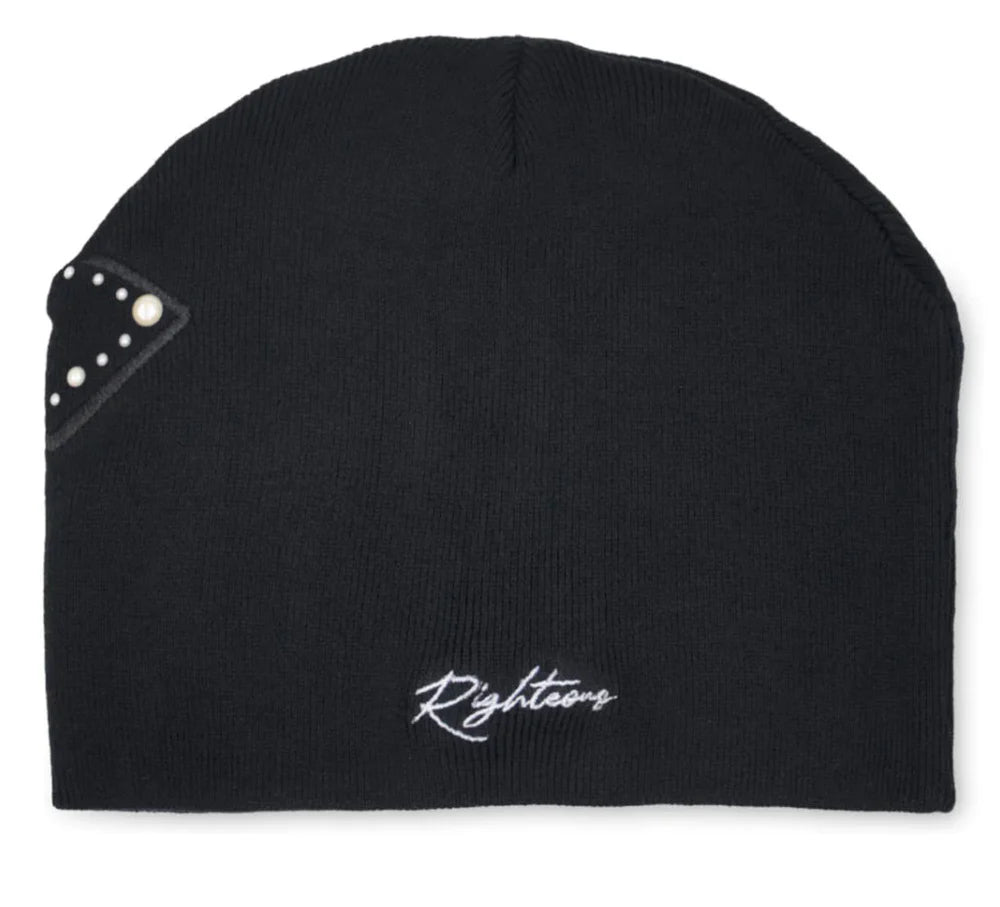
Logo work is where knockoffs typically fail, because reproducing exact proportions and placement takes precision they usually don’t invest in. On real Righteous garments, the embroidered/printed brand name sits at a consistent size and position across a given style run — compare product photos from the official site against what you’ve received if you have any doubt.
Type thickness and letter spacing are quick indicators. A counterfeit logo often looks somewhat distorted in width or inconsistently kerned, because it’s typically redrawn by hand instead of sourced from the true vector artwork. Real garment tags also list matching material content and washing guidance that correspond to the online listing at time of purchase — if the label says anything far removed from the online description, that’s a discrepancy worth questioning.
Packaging matters too. Purchases through We Are Righteous typically arrive with consistent branded elements — mailer bags or shipping boxes, tissue paper or tags matching the current season’s branding, and paperwork that matches what you were sent at checkout. A generic bag lacking any branding or paperwork isn’t necessarily proof of a fake, but alongside other suspicious details, it strengthens the case.
Review the Side-by-Side First
When you’re unsure whether a listing is legitimate, working through a direct comparison usually clears things up fast. Below, the table breaks down the main contrasts shoppers commonly note between verified authentic Righteous pieces and counterfeit or misrepresented listings.
| Verification point | The Real Righteous Apparel Item | Typical Fake Indicators |
|---|---|---|
| Cloth density | Dense, substantial fleece, around 350-450 GSM varying by which style | A flimsy material that contradicts the stated weight |
| Seam work | Even, reinforced at stress points, no loose threads inside | Inconsistent stitch spacing, dangling threads, and seams that lack reinforcement |
| Logo placement | Consistent size and position matching official product photos | Slightly off-centre, stretched, or inconsistently spaced lettering |
| Shipping presentation | A labeled mailer or box paired with a matching invoice or order confirmation | Unbranded packaging, no documentation, mismatched order details |
| Seller reputation | A confirmed retailer or the authorized We Are Righteous storefront | A unverified account on a marketplace, using stock or vague photos |
Though far from exhaustive, these points capture the checks that surface most often in authentic we are righteous brand feedback and buyer discussions. If a listing fails two or more of these checks simultaneously, it’s worth pausing before you complete the purchase.
Approach Reviews with a Critical Eye
Not all reviews are created equal, and this matters enormously when you’re trying to verify a righteous clothing brand purchase. Give weight to reviews with specific, checkable details — such as exact fit observations, after-washing fabric behaviour, or comparisons with past seasons — over empty praise such as “great quality, fast shipping” that has no substance.
Unboxing videos and video reviews tend to be tougher to convincingly fabricate, since they capture the garment moving, under different lighting, and often feature close-ups of labels and stitching. If you’re relying on a written we are righteous review, cross-reference it against at least one other independent source before trusting it fully, especially if the review is unusually short or oddly enthusiastic without detail.
Pay attention to recurring complaints too. Should multiple reviews point to the same issue — like sizing being generous, or a specific colourway fading ahead of schedule — it’s legitimate feedback on the genuine product, not evidence of a fake. Distinguishing between “this is a real quality concern with the brand” and “this is evidence of a fake” is part of reading reviews critically.
Final Checks Before You Commit
Before finalising any purchase, run through a short mental checklist: is the seller verified, does the price align with the brand’s known range, do the photos show real stitching and tag detail, and does the description match what arrives. None of these checks take more than a few minutes, but together they dramatically reduce your risk of ending up with a counterfeit.
Should any doubt arise once you’ve bought something, message the retailer or the brand directly with well-lit pictures of the garment, tags, and packaging. An honest seller will address a plain question about legitimacy; a cagey or combative reaction is a red flag in itself. Being a savvy buyer isn’t hard — all it takes is attentiveness to the things that actually matter.